 LOOK
LOOKWhat Haircut Suits Me? How to Work It Out for Your Own Face
The haircut that suits you balances your face proportions, works with your hair's texture, density and hairline, and fits the time you will actually spend styling it. Face shape is a useful first clue, but it is only one of those checks.
Face shape is a start, not the answer
Most advice stops at face shape: oval, round, square, long, heart. That is a fair starting point, because a haircut can add or remove width and height where your face needs it. But two people with the same face shape can need very different cuts. Four other things matter just as much:
- Texture: straight, wavy and curly hair sit and grow in completely different ways.
- Density: fine or thin hair cannot hold the same shape as thick hair, no matter how good the cut is.
- Hairline: a receding or uneven hairline, cowlicks and a strong widow's peak all limit which fringes and partings work.
- Styling time: a cut that needs ten minutes with a blow-dryer will look wrong on every day you skip it. Be honest about your mornings.
A good haircut is the one that looks right on day five, not just when you walk out of the shop.
How to read your face from a photo
Looking in the mirror is not reliable, and a normal selfie is worse. Phones held at arm's length use a wide lens close to your face, which makes the nose and the middle of the face look bigger and pushes the ears and jaw back. That can make a face look rounder or narrower than it really is.
For a more honest read:
- Ask someone to take the photo from about six feet (two meters) away, then zoom in, or prop your phone up and use the timer.
- Keep the camera at eye level, face straight on, with a neutral expression.
- Pull your hair back off your forehead and away from your ears, or wet it down.
- Use soft, even light from the front, not overhead light.
Then compare three things: the width of your forehead, cheekbones and jaw, and the length of your face against its width. Do not worry if you fall between two shapes. Most people do.
Common face shapes and what usually helps
| Face shape | Men: what usually helps | Women: what usually helps |
|---|---|---|
| Oval | Most cuts work; choose by texture and lifestyle | Most lengths work; avoid heavy fringes that hide the face |
| Round | Shorter sides with some height on top; a side part | Layers below the chin, side-swept fringe, some lift at the crown |
| Square | Textured top to soften the angles; not too boxy at the sides | Soft layers and waves around the jaw; side parts over blunt lines |
| Long | Less height on top, some width kept at the sides, a fringe | Fringe or curtain bangs, volume at the sides, shoulder length or shorter |
| Heart | Medium length on top, a bit more fullness lower down; a beard can add jaw width | Chin-length bobs, volume below the cheekbones, side-swept fringe |
| Diamond | Fringe or textured top to widen the forehead; keep some side fullness | Fringe, tucked-back styles, volume at the jaw and forehead |
Treat this as a direction, not a rule. The examples below are fictional, AI-generated men, not real customers. This one has a long face, and the suggested plan lowers the height on top and keeps some width at the sides:
 Before
 After
After- Hair
- Lower, side-swept texture balances your longer facial proportions
- Shorten the spiky top into soft layers
- Taper temples; retain some side width
- Use a loose part and diagonal fringe
- Keep your natural ash-brown highlights
- Style with a small amount of matte paste
- Brows
- Keep your strong brows full, with subtly cleaner edges
- Preserve the natural straight shape
- Remove only isolated central strays
- Tidy stray hairs beneath outer tails
- Brush hairs outward without darkening
- Eyes
- Your blue-gray eyes stay naturally defined without makeup
- Keep lash lines and lashes natural
- Subtly soften under-eye dryness
- Retain lid folds and natural shadows
- Keep eye size and iris color unchanged
- Skin & makeup
- A lightly fresher complexion retains pores and freckles
- Soften isolated blemish redness
- Preserve natural cheek coloration
- Retain pores, freckles and fine lines
- Use no blush, contour or visible makeup
- Keep lips natural; use clear balm
- Beard
- Short, tidy stubble gives your lower face a cleaner outline
- Trim existing stubble to 1–2 mm
- Keep your natural beard density
- Tidy the mustache above the lip
- Clean stray hairs along cheek edges
- Blend sideburns into tapered temples
Check your hair texture before picking a style
Your hair decides what is possible as much as your face does. A quick check: let your hair air-dry with no product and see what it does.
- Straight: shows every line, so clean, precise cuts look sharp. Very flat straight hair may need some layering or texture on top to avoid lying limp.
- Wavy: often looks best with a bit of length left on top so the waves can show. Taking bulk out of the sides usually stops it looking puffy.
- Curly: shrinks as it dries and grows out more than down. Cutting curls dry, or by someone used to curls, avoids surprises. Removing the wide outer halo often brings the face forward.
- Fine: blunt ends and shorter lengths tend to look fuller. Too many layers can make it look thinner.
- Thick: often needs weight removed so it does not grow into a helmet shape.
Much of this depends on your exact hair, so treat it as a starting point and listen to a stylist who has touched your hair. Here is an example where curly volume was reduced to show more of the face:
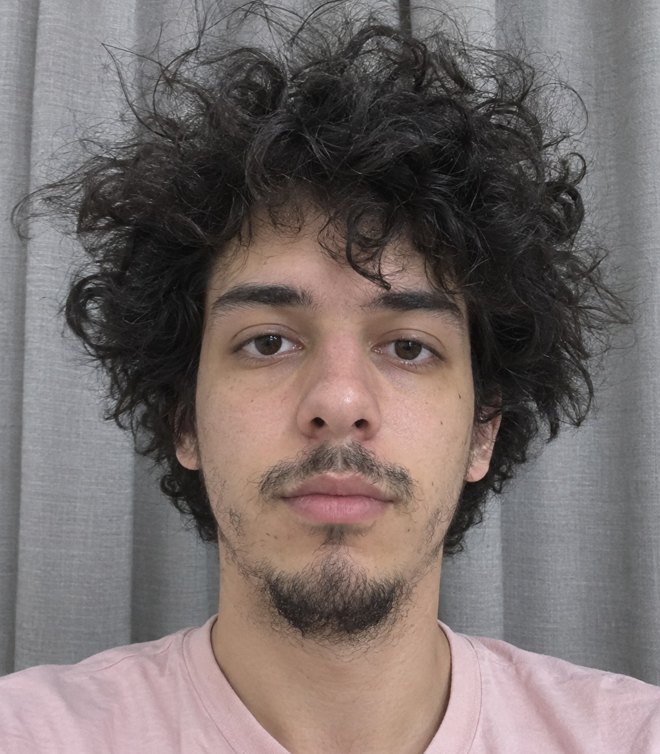 Before
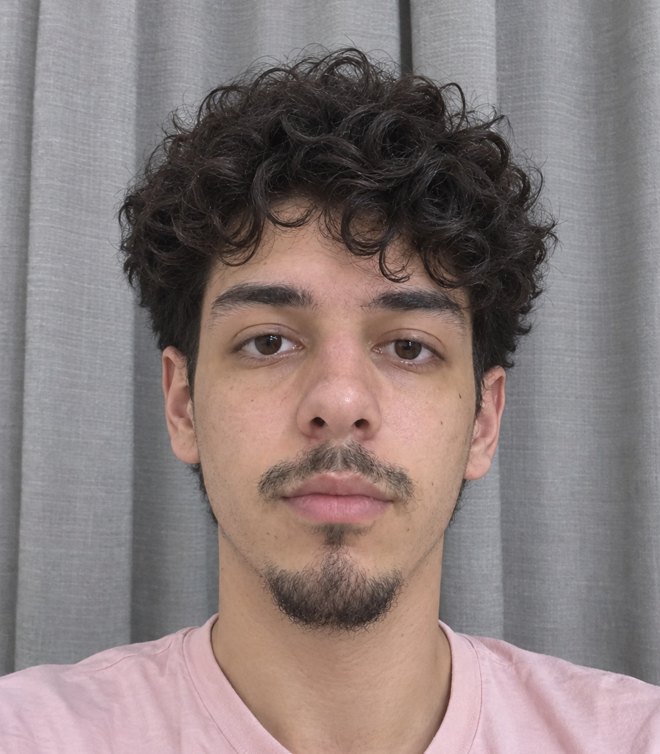 After
After- Hair
- A shorter curly silhouette brings your features forward
- Reduce the wide halo with scissor layers
- Taper sides and clear hair around ears
- Keep soft curls and an airy fringe
- Define curls with a light curl cream
- Keep your natural dark color
- Brows
- Keep your strong brows; refine only stray hairs
- Preserve the full, mostly straight shape
- Brush hairs outward with clear gel
- Remove isolated strays below the tails
- Avoid thinning or raising the arches
- Eyes
- Less surrounding hair lets your eyes stand out naturally
- Keep fringe clear of the outer eyes
- Preserve natural lashes without mascara
- Keep your eye shape and under-eye texture
- Skip eyeliner for this natural finish
- Skin & makeup
- A natural complexion with texture and character intact
- Lightly blot shine around the nose
- Use lightweight moisturizer for texture
- Keep freckles, moles and natural tone
- Skip blush, contour and visible makeup
- Beard
- A compact goatee gives the lower face a cleaner frame
- Trim the goatee into a compact round shape
- Clean sparse cheek and neck strays
- Neaten moustache edges above the lip
- Retain your natural small soul patch
- Keep lips hydrated without added color
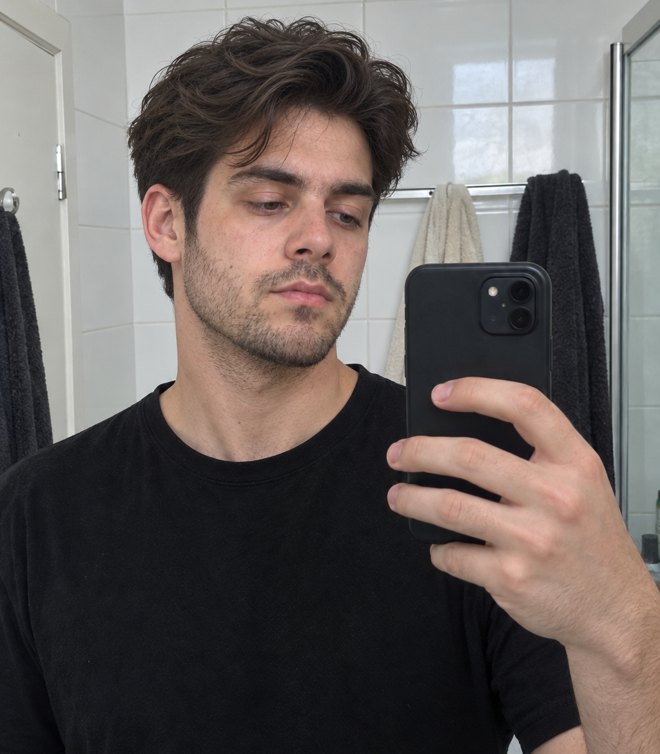
And one with natural waves kept on top while the sides were tapered:
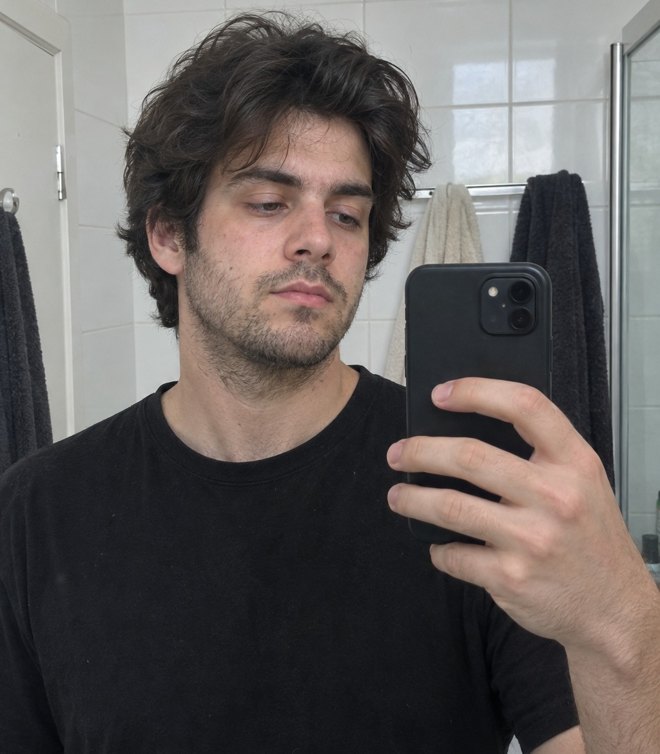 Before
 After
After- Hair
- Tapered sides let your natural waves frame the face.
- Remove bulk around ears and nape
- Keep a medium-length, layered wavy top
- Use a soft off-center part
- Style with matte cream for separation
- Keep your natural dark brown color
- Brows
- Cleaner edges preserve your strong, natural brows.
- Keep the full thickness and low arch
- Brush hairs outward along their growth
- Trim only tips extending past the shape
- Remove isolated hairs between brows
- Eyes
- Subtle freshness with your natural gaze intact.
- Lightly soften under-eye shadows
- Retain natural lid folds and creases
- Keep lashes natural and uncoated
- Skip eyeliner for this polished look
- Skin & makeup
- More even-looking skin with real texture retained.
- Subtly soften cheek and nose redness
- Preserve pores and small imperfections
- Use a light moisturizer for balance
- Keep lips hydrated without added color
- Skip visible makeup and contour
- Beard
- Defined stubble gives your lower face a cleaner frame.
- Even out stubble to roughly 3 mm
- Keep the chin slightly fuller
- Clean stray hairs above cheek edges
- Trim the moustache clear of the lip
- Tidy the neckline beneath the jaw
How to brief your barber or stylist
Most bad haircuts come from vague requests like "just tidy it up" or "short on the sides". A clear brief covers:
- Lengths in numbers: for clipper work, give millimeters or a guard number, for example roughly 6 mm (often a #2) or roughly 10 mm (often a #3). Guards vary between brands, so check with them before they start.
- How short on top: show with your fingers how much length you want left, rather than saying "a little".
- Fade, taper or scissors: say whether you want a sharp fade, a soft taper, or scissor work only.
- Parting and fringe: where you part your hair and whether the fringe goes forward, to the side or back.
- What you will do at home: tell them how long you spend styling and what product you use, so they cut for that.
- A picture: one clear photo beats any description, ideally of your own face rather than a model with different hair.
When a preview on your own photo helps
The hard part is not reading about face shapes; it is picturing the change on you. LookAdvisor takes one selfie and, in about 30 seconds, creates a realistic before and after of your own face with a better haircut, plus beard, brow and grooming changes. It also gives you a five-zone plan covering hair, brows, eyes, skin, and beard or lips, written so you can show it to your barber or stylist. It costs $4.99 once, with no subscription, and works for men and women.
It does not measure your face shape, offer a catalog of styles to scroll, or promise hair growth. It shows a realistic, improved version of the hair and face you already have.
See the haircut that suits you, on your own face
Upload one selfie, pay $4.99 once, and in about 30 seconds get a realistic before and after plus a plan to show your barber or stylist.
Questions
How do I know what haircut suits my face?
Start with a straight-on photo taken from a distance to judge your face proportions, then check your hair texture, density and hairline. The right cut works with all of these and with the time you are willing to spend styling.
Can I find my face shape from a selfie?
A normal arm's-length selfie distorts your face, usually enlarging the middle and shrinking the jaw and ears. Have someone take the photo from about six feet (two meters) away at eye level with your hair pulled back.
Does LookAdvisor tell me my face shape?
No. It does not detect face shape or offer a style catalog. It creates a realistic before and after of your own face with an improved haircut and grooming, plus a five-zone plan to show your barber or stylist.
What should I say to my barber to get the cut I want?
Give lengths in millimeters or approximate guard numbers, show how much to leave on top, say whether you want a fade, taper or scissor cut, and bring a clear photo, ideally of your own face with the style.