 LOOK
LOOKWhat Beard Suits Me? Start With What You Can Grow
The beard that suits you is the one your growth can support, shaped with clean cheek, neck and chin lines that balance your face. Check density, patches and color first, then choose between clean-shaven, stubble, a compact beard or a goatee.
Start with what your beard actually grows
Before thinking about face shape, look at the raw material. Grow everything out for two to four weeks without trimming, then check it in daylight from the front and both sides. You are looking for three things:
- Density. Can you see skin through the hair on your cheeks, chin and mustache? Thick, even growth gives you every option. Thin growth usually looks better kept short.
- Patchy areas. Many men fill in on the chin and mustache well before the cheeks. If the cheeks stay sparse, styles built around the chin and upper lip, or short stubble, tend to look more deliberate than a full beard with gaps.
- Color. A beard that is lighter, redder or grayer than your hair changes how strong it reads. Salt-and-pepper or light beards often look tidier a little shorter, where the mix of shades stays even.
Only once you know what grows does face proportion come in. As a loose rule, length on the chin makes the lower face look longer, while fullness on the sides makes it look wider. If your face already reads long, keep the sides reasonably full and stop the chin from getting pointed. If it reads short or round, a little extra length at the chin and tighter sides can add some definition along the jaw. Treat this as a starting point, not a formula.
Where to keep length and where to take it off
Most beards improve more from clean edges than from a new style. Three lines do most of the work:
- Cheek line. Leave it mostly natural and only remove the stray hairs sitting above it. Cutting it too low makes the beard look drawn on and the face wider.
- Neckline. A common guide is about one to two finger-widths above the Adam's apple, curving back toward the ears. Too high and the jaw looks soft; too low and the neck looks fuzzy.
- Chin. This is where you shape the outline: rounded, squared or slightly fuller. A little extra length here can strengthen a softer jaw.
The examples below are fictional AI-generated men, not real customers. Here a long, heavy beard is cut down to a compact full beard, with the sides tapered into the sideburns and a softly rounded square base.
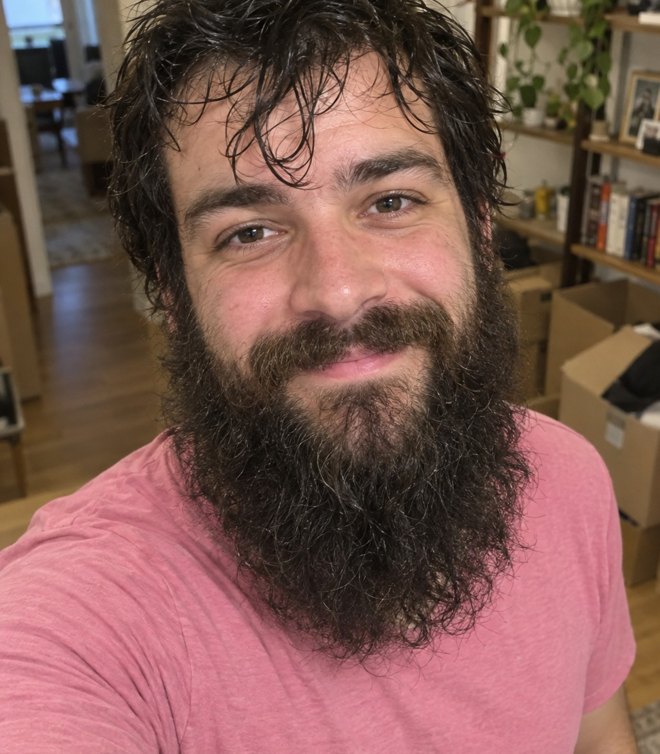 Before
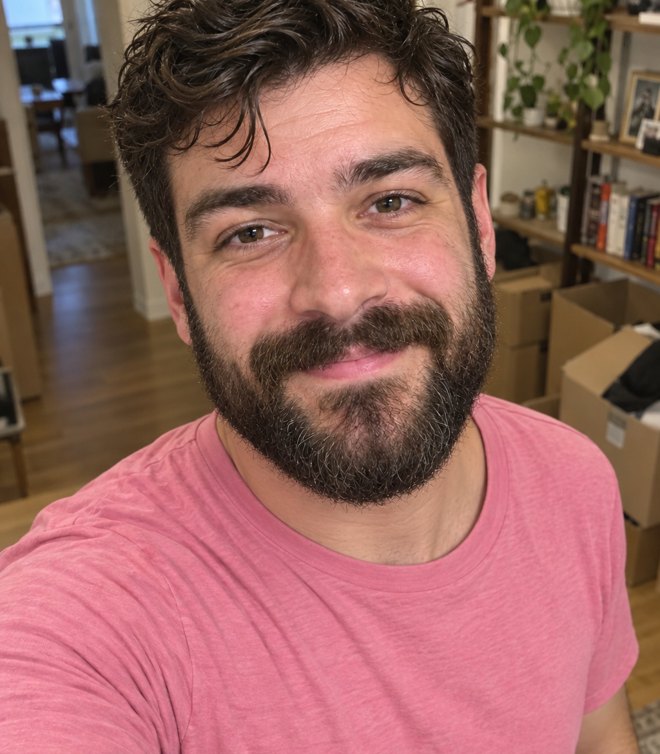 After
After- Hair
- Tapered sides and swept waves open up your face
- Scissor-taper the bulky sides
- Keep textured waves on top
- Sweep fringe off-center
- Use matte cream for separation
- Keep your natural dark brown
- Brows
- Keep your strong brows; refine only stray hairs
- Preserve natural thickness
- Brush hairs outward into place
- Remove isolated lower-edge strays
- Keep the natural soft arches
- Eyes
- Cleaner framing highlights your eyes naturally
- Clear heavy fringe from eye area
- Keep lashes and lids natural
- Preserve under-eye expression lines
- Skip eyeliner and visible makeup
- Skin & makeup
- Natural texture and warmth with controlled shine
- Lightly blot excess surface shine
- Use a lightweight moisturizer
- Preserve pores and smile lines
- Keep natural cheek warmth
- Skip blush, contour and foundation
- Beard
- A compact full beard restores facial balance
- Shorten to a compact full beard
- Taper sides into sideburns
- Shape a softly rounded square base
- Trim mustache above the upper lip
- Keep natural salt-and-pepper strands
Clean-shaven, stubble, compact beard or goatee
If you are deciding between beard or no beard, this table sums up the main trade-offs. Lengths are approximate, and clipper guard numbers vary between brands.
| Style | Growth needed | Upkeep | What it does to the face |
|---|---|---|---|
| Clean-shaven | None | Shaving daily or every other day | Shows the jawline as it is; can look younger and more open |
| Stubble (1–3 mm) | Light, fairly even growth | Trim every few days, roughly a #0.5 to #1 guard | Adds shadow and outline to the lower face without hiding much |
| Short boxed / compact full beard | Filled-in cheeks and a connected mustache | Trim weekly, clean the edges, use beard oil or balm | Adds structure at the jaw; can balance a longer face |
| Goatee | Chin and mustache only | Shave cheeks often, shape the chin weekly | Draws attention to the center of the lower face; works around sparse cheeks |
A goatee is a good example of working with what grows. Here a loose goatee is trimmed into a compact round shape, with the sparse strays cleaned off the cheeks and neck.
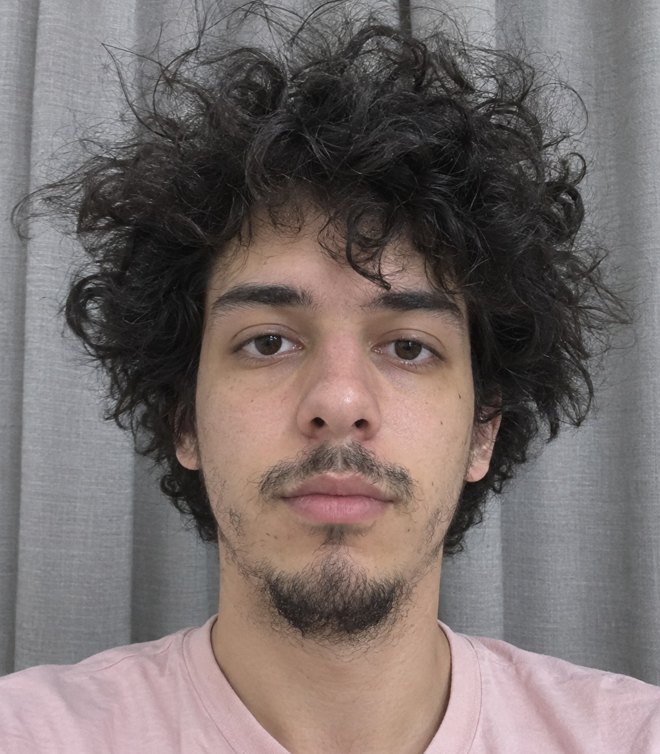 Before
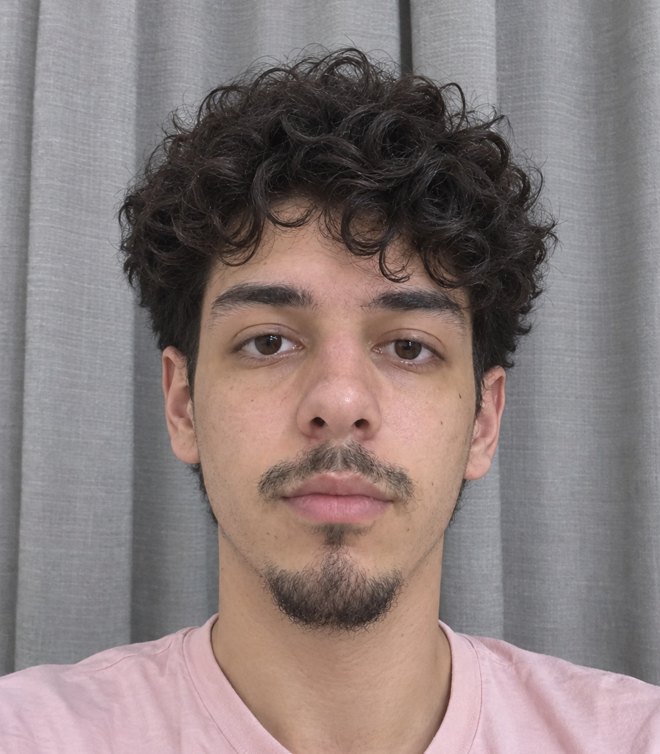 After
After- Hair
- A shorter curly silhouette brings your features forward
- Reduce the wide halo with scissor layers
- Taper sides and clear hair around ears
- Keep soft curls and an airy fringe
- Define curls with a light curl cream
- Keep your natural dark color
- Brows
- Keep your strong brows; refine only stray hairs
- Preserve the full, mostly straight shape
- Brush hairs outward with clear gel
- Remove isolated strays below the tails
- Avoid thinning or raising the arches
- Eyes
- Less surrounding hair lets your eyes stand out naturally
- Keep fringe clear of the outer eyes
- Preserve natural lashes without mascara
- Keep your eye shape and under-eye texture
- Skip eyeliner for this natural finish
- Skin & makeup
- A natural complexion with texture and character intact
- Lightly blot shine around the nose
- Use lightweight moisturizer for texture
- Keep freckles, moles and natural tone
- Skip blush, contour and visible makeup
- Beard
- A compact goatee gives the lower face a cleaner frame
- Trim the goatee into a compact round shape
- Clean sparse cheek and neck strays
- Neaten moustache edges above the lip
- Retain your natural small soul patch
- Keep lips hydrated without added color
Stubble is the lowest-commitment option and suits a lot of people, but it still needs edges. In this example the stubble is evened out to roughly 3 mm, the chin is left slightly fuller, and the neckline is tidied beneath the jaw.
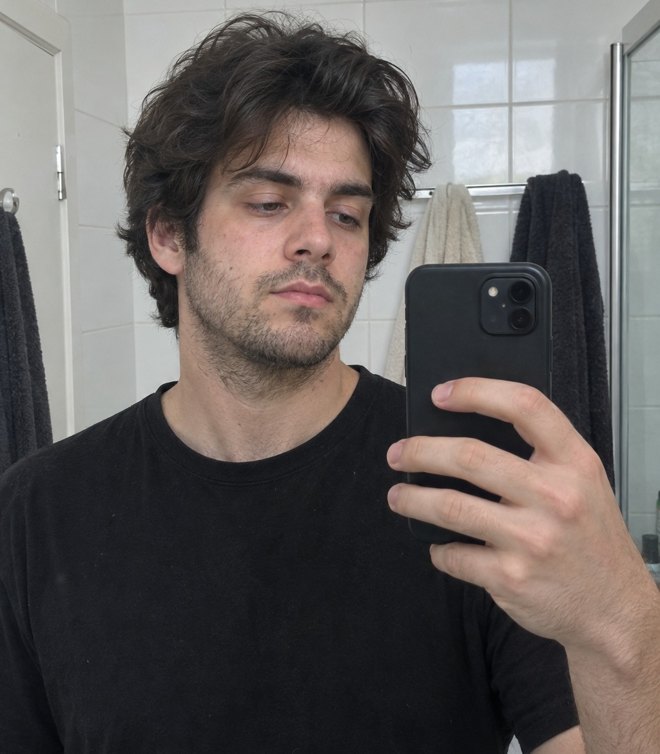 Before
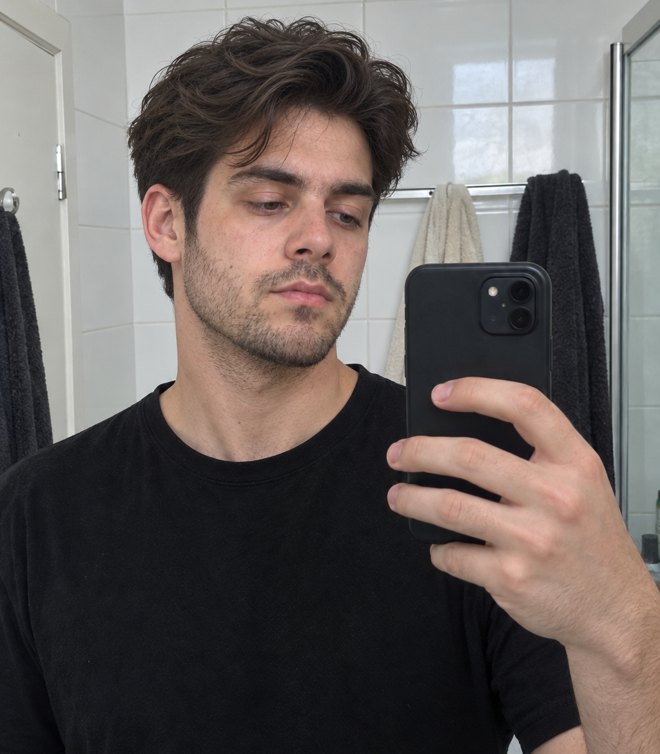 After
After- Hair
- Tapered sides let your natural waves frame the face.
- Remove bulk around ears and nape
- Keep a medium-length, layered wavy top
- Use a soft off-center part
- Style with matte cream for separation
- Keep your natural dark brown color
- Brows
- Cleaner edges preserve your strong, natural brows.
- Keep the full thickness and low arch
- Brush hairs outward along their growth
- Trim only tips extending past the shape
- Remove isolated hairs between brows
- Eyes
- Subtle freshness with your natural gaze intact.
- Lightly soften under-eye shadows
- Retain natural lid folds and creases
- Keep lashes natural and uncoated
- Skip eyeliner for this polished look
- Skin & makeup
- More even-looking skin with real texture retained.
- Subtly soften cheek and nose redness
- Preserve pores and small imperfections
- Use a light moisturizer for balance
- Keep lips hydrated without added color
- Skip visible makeup and contour
- Beard
- Defined stubble gives your lower face a cleaner frame.
- Even out stubble to roughly 3 mm
- Keep the chin slightly fuller
- Clean stray hairs above cheek edges
- Trim the moustache clear of the lip
- Tidy the neckline beneath the jaw
Match the beard to your haircut
People see the beard and the haircut together. A few pairings that usually work:
- Tapered sides plus beard: blend the sideburns into the taper so there is no hard step between hair and beard.
- Volume on top plus a full beard: keep the sides tighter so the head does not look wide at both ends.
- Very short haircut: stubble or a short beard keeps things in proportion; a long beard can make the head look small.
- Curly or wavy hair: a beard with similar texture often looks best a little shorter than you expect, since curls add visible bulk.
How well any of this works depends on your hair type and growth, so be ready to adjust after the first cut.
How to tell your barber exactly what you want
"Tidy it up" leaves every decision to the barber. Give them specifics instead:
- The overall length, ideally as a guard number or in millimeters, and whether the chin should stay longer than the sides.
- Where the cheek line goes: natural with strays removed, or lowered.
- Where the neckline sits, and whether you want it squared or rounded.
- What happens to the mustache: trimmed clear of the lip, or kept fuller.
- How the sideburns should meet the haircut.
A picture helps more than any description. A photo of your own face with the target beard is clearer than a photo of someone else, because the barber can see how it should sit on your growth pattern.
Honest limits
No trim, product or app can make hair grow where it doesn't. If your cheeks are patchy, the realistic choices are shorter styles, a goatee, or patience while it fills in over time. LookAdvisor does not detect face shape, offer a catalog of beard styles or promise growth. It shows a realistic before/after of your own face with a better-groomed beard, haircut and brows, plus a written plan you can show your barber.
See your own face with a better beard
Upload one selfie and in about 30 seconds get a realistic before/after plus a beard, hair and grooming plan for your barber, for a one-time $4.99.
Questions
Should I have a beard or no beard?
If your growth is even and you like a stronger jaw outline, a short beard or stubble is worth trying. If it grows patchy or you dislike the upkeep, clean-shaven or a goatee is often the tidier choice. Growing it out for a few weeks is the only way to know for sure.
What beard suits a patchy beard?
Short stubble at around 1–3 mm or a goatee usually looks more deliberate than a full beard with gaps. Keeping the cheeks short or clean-shaven hides the thinnest areas.
What clipper guard gives stubble?
Stubble is roughly 1–3 mm, which is about a #0.5 to #1 guard on many clippers. Guard sizes vary by brand, so check the millimeter marking on yours.
Does LookAdvisor tell me my face shape?
No. It does not detect face shape or offer a style catalog. It creates a realistic before/after of your own face with an improved beard, haircut and grooming, plus a 5-zone plan to show your barber.